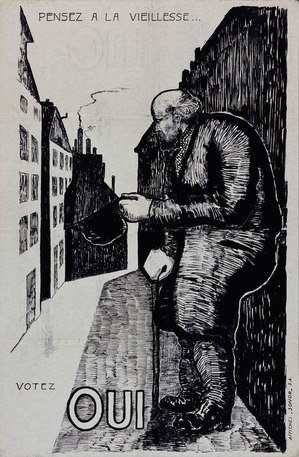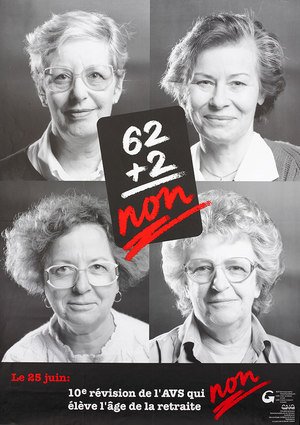
The definition and perception of age in our society has fundamentally changed. The term ‘retirement age’ only came to designate a specific phase of life during the 20th century and in tandem with the development of old age provision.
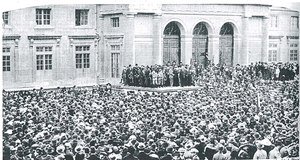
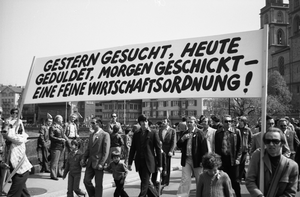
Changes in unemployment policy during the 20th century have transformed the circumstances of unemployed wage earners. Yet, unemployment affects people differently depending on age, sex and nationality.
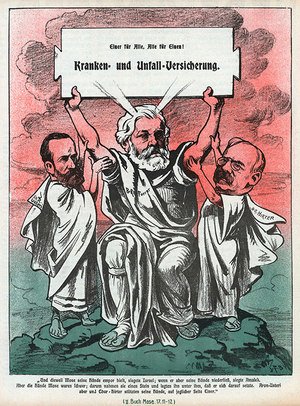
Workers had a right to compensation for work related accidents and illnesses since 1877. Before compulsory accident insurance was introduced, workers had to assert this right themselves. Insured workers received an automatic entitlement to compensation with the establishment of Suva in 1918. However, during the interwar period, Suva was hesitant in enforcing this entitlement.
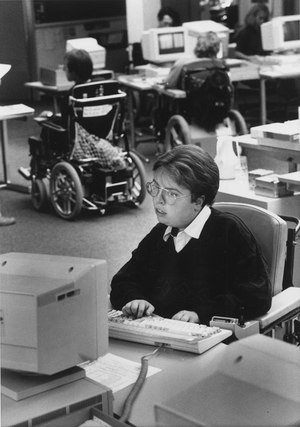
Historically, disabilities have been a basic fact of human life. Most men and women who became unemployed due to disability were reliant on welfare until well into the 20th century. Their situation has improved continually since 1960 with the introduction of social security and in particular disability insurance (IV). Yet, social insurance tends to reduce disability to the incapacity to work; the social and cultural needs of people with disabilities are often overlooked. Modern equality and integration policy seeks to prevent this.
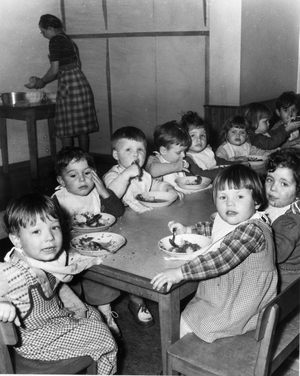
The Swiss welfare state cares for mothers, fathers and children in various ways. The factory laws contained special provisions for children and mothers, while family protection focused on the traditional family unit. In more recent decades, day care centres and maternity insurance have improved the reconciliation of work and family life.
Throughout the history of the social welfare state, quite different groups of people have been called poor; it depended on how poverty was socially perceived. In every epoch, though, poverty has been addressed as a moral issue. Modern societies often distinguish between two categories: the ill-fated, involuntarily poor, and the complicit poor, partly or fully to blame for their plight.
In the 20th century, foreign nationals in Switzerland only received limited social welfare protection depending on their type of residence permit. Seasonal workers were mostly excluded from social security benefits. After the Second World War, foreigners were gradually afforded better provision thanks to bilateral social insurance agreements. Broad legal equivalence was only achieved when the seasonal worker statute was abolished in 2002.
Within the Swiss social security system, self-employed persons are granted a special status. The majority of social insurance schemes prioritise the protection of the workforce, while even today, self-employed workers are often only partially or inadequately covered.