Peter Binswanger
The career of Peter Binswanger (1916-1997), from Thurgau, illustrated the continuous interplay between the state and the private sector in social security. Initially, Binswanger was a lawyer in the Federal Social Insurance Office before becoming the director of a life insurance company. He therefore played a key role in both developing and implementing the three-pillar doctrine in old age provision.
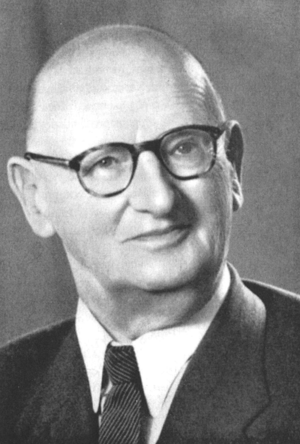
![Ernst Kaiser. Portrait from ETH Graphische Sammlung. Source: http://www.library.ethz.ch/Ressourcen/Digitale-Kollektionen/Kurzportraets/Ernst-Kaiser-1907-1978 [03.02.2014].](/img/containers/assets/imported_images/csm_portrait-ernst-kaiser_b7abf8bbbb.jpg/19f22f5419e50bf6b51b5334860bfa81/csm_portrait-ernst-kaiser_b7abf8bbbb.jpg)
![Johann Jakob Kummer, 1884. Source: http://www.medizin.unibe.ch [06.02.2014].](/img/containers/assets/imported_images/csm_1884_kummer_johann-jakob_6b571fa987.jpg/420109ab420965cf135891b037c745e0/csm_1884_kummer_johann-jakob_6b571fa987.jpg)
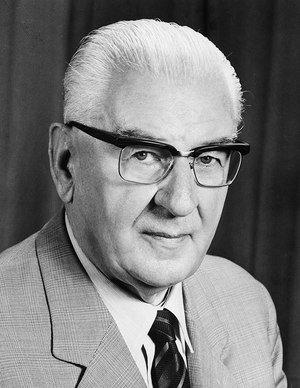
![Alfred Tzaut, Suva director 1913-1936. Source: www.suva.ch [09.02.2014].](/img/containers/assets/imported_images/csm_alfred_tzaut_high_res_48be6e354c.jpg/ddd969a54e6e11af43f80c8d82f5f1ea/csm_alfred_tzaut_high_res_48be6e354c.jpg)